
Recognizing Rodent Activity Early
The sooner you identify rodent activity in your home, the easier and less costly the problem is to resolve. Rodents reproduce quickly; a small issue can become a significant infestation within weeks if left unaddressed. Knowing what to look for helps you act before the problem escalates.
The signs below apply to both rats and mice, though the scale and location of evidence differs between species. If you notice any of these indicators, a professional inspection can confirm the type and extent of activity.
Droppings
Rodent droppings are the most reliable indicator of activity. They are typically found along walls, in cabinets, under sinks, behind appliances, and in attic or crawl space areas. Key differences between species:
- Mouse droppings are small (3-6mm), dark, rod-shaped with pointed ends. Mice produce 50-75 droppings per day, so even a small population leaves significant evidence.
- Roof rat droppings are larger (12-13mm), spindle-shaped with pointed ends, and often found in elevated areas: attics, upper cabinets, shelving.
- Norway rat droppings are the largest (18-20mm), capsule-shaped with blunt ends, typically found at ground level near foundations, in crawl spaces, and behind stored items.
Fresh droppings are dark and moist; older droppings become grey, dry, and crumbly. The presence of both fresh and old droppings indicates ongoing, sustained activity.
Sounds
Nocturnal scratching, scurrying, thumping, or gnawing sounds are often the first sign homeowners notice. Rodents are most active between dusk and dawn, so these sounds typically occur at night.
- Light, rapid scratching in walls or ceilings often indicates mice
- Heavier thumping or running sounds in the attic typically indicate rats
- Gnawing sounds may be heard when rodents are chewing through materials
- Squeaking occasionally indicates young rodents in a nest
Pay attention to where you hear sounds; this helps professionals determine species and narrow down nesting locations during an inspection.
Gnaw Marks
Rodents gnaw continuously to maintain their constantly growing incisors. Look for gnaw marks on food packaging, wood framing, door frames, baseboards, wiring, and plastic pipes. Mouse gnaw marks are fine and narrow; rat gnaw marks are larger and more pronounced. Fresh gnaw marks are light-colored; older ones darken over time.
Gnaw damage on electrical wiring is particularly concerning because it creates a fire hazard. If you see gnaw marks on wiring in your attic or crawl space, address the issue promptly.
Nesting Material
Rodents construct nests from shredded materials: paper, fabric, insulation, plant material, cardboard. Nests are typically found in hidden, protected locations: inside wall cavities, in attic insulation, behind stored boxes, under appliances, and in rarely disturbed storage areas.
Grease Marks and Rub Marks
Rats in particular leave dark, greasy marks (called rub marks) along surfaces they travel regularly. Their fur carries body oils and dirt that transfer to walls, baseboards, pipes, and beams. These marks are especially visible along established travel routes in attics, along foundation walls, and near entry points.
Odor
A persistent musky or ammonia-like smell in enclosed spaces: cabinets, closets, attics, crawl spaces can indicate rodent urine and an established population. A sudden, strong odor may indicate a deceased rodent within a wall void or other inaccessible area.
Visual Sighting
Seeing a live rodent, especially during daylight hours, typically indicates a significant population. Rodents are nocturnal, so daytime activity suggests that available nesting sites are overcrowded and competition for food is high.
What to Do If You Notice These Signs
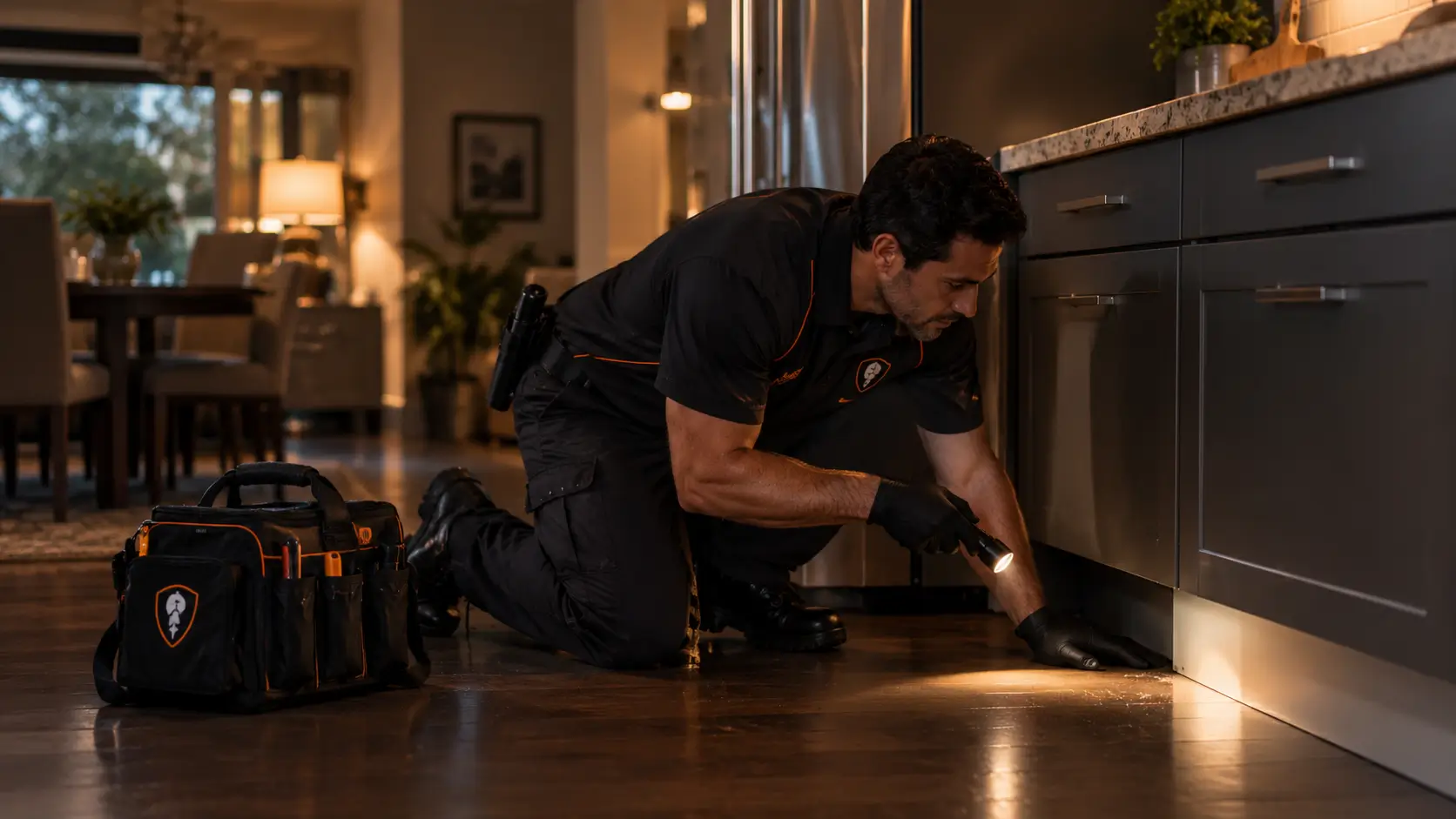
If you observe one or more of these signs, a professional inspection is the most effective next step. An inspection determines the species, identifies entry points, assesses the extent of activity, and provides the information needed to develop an effective treatment and exclusion plan.
Attempting to address the problem with store-bought traps alone often provides temporary relief but does not resolve the underlying issue: the entry points that allow rodents to access your property. Learn more about how rodents enter homes and how to prevent infestations.
Noticing signs of rodent activity?
Call (805) 429-3838 to Schedule Inspection